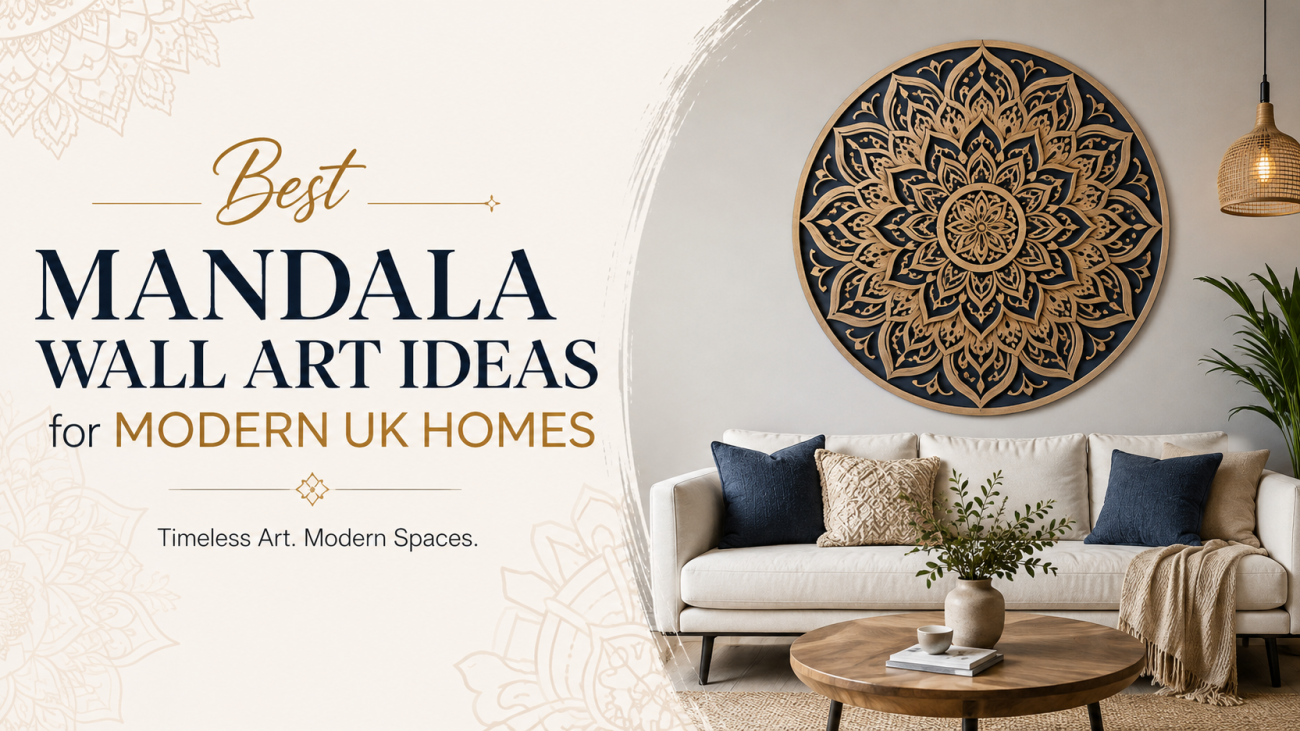
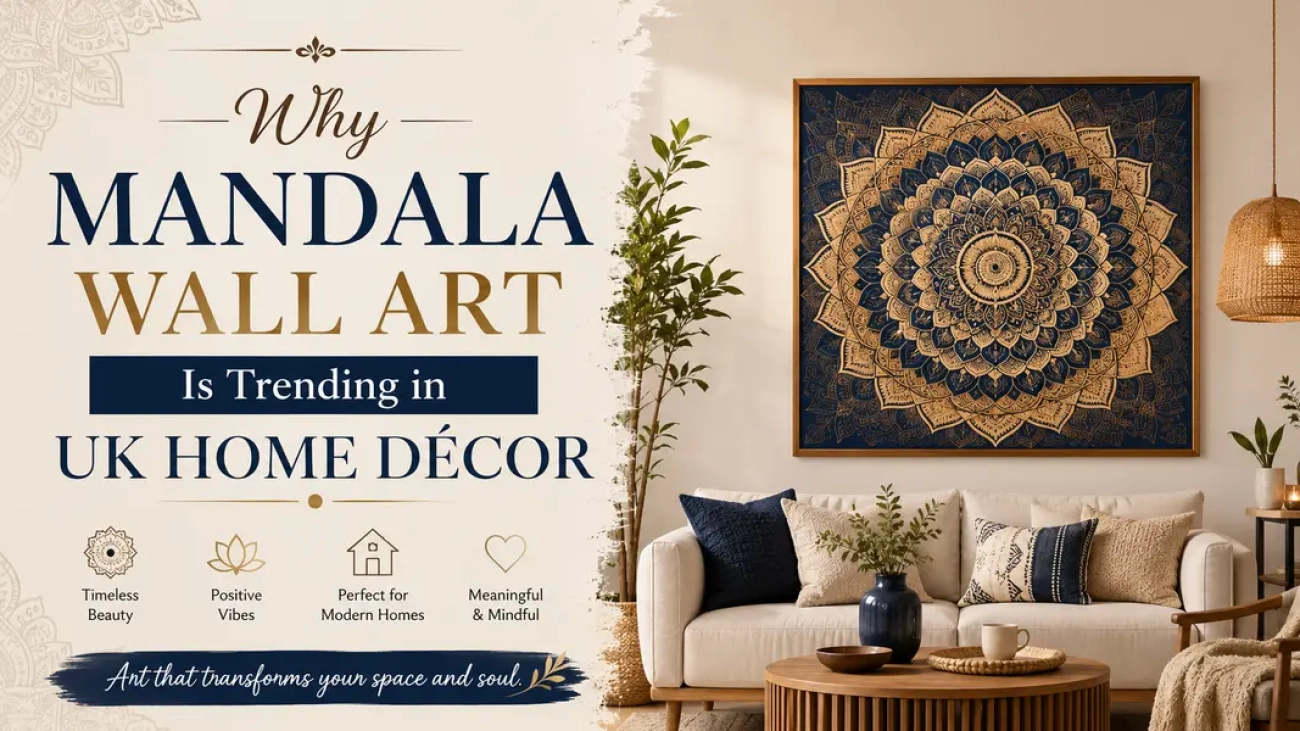
Home décor is becoming more personal, expressive, and focused on creating spaces that feel comfortable rather than simply looking perfect. In the UK, current interior trends are moving towards warmer colours, natural materials, layered textures, wellness-led spaces, and décor that reflects individual personality.
Within this shift, mandala wall art has an interesting place. Its detailed patterns can add character to minimalist rooms, while its circular forms and association with balance and harmony make it appealing for people creating calmer living spaces.
But why exactly is mandala artwork becoming such an attractive choice for modern UK homes?
Let’s explore the key reasons.
What Is Mandala Wall Art?
A mandala is a geometric design traditionally associated with concepts such as wholeness, balance, and harmony. The word comes from Sanskrit and is commonly translated as “circle”.
Today, mandala-inspired designs appear across contemporary art, interiors, textiles, and decorative objects.
Mandala wall art brings these intricate patterns into the home as a decorative focal point. Depending on the design, it can work with minimalist, bohemian, contemporary, Scandinavian, or eclectic interiors.
The versatility of the pattern is one of the reasons it works so well in modern homes.
1. UK Interiors Are Becoming More Personal
One of the biggest changes in contemporary interior design is the move away from spaces that look overly staged.
British Vogue’s 2026 interiors coverage highlights a growing preference for lived-in, personal homes and interiors that feel collected and meaningful rather than designed purely for photographs.
This creates an opportunity for distinctive artwork.
Instead of using generic decorative prints, homeowners can choose pieces that reflect their personality, interests, cultural appreciation, or preferred aesthetic.
Mandala designs can provide that individuality while remaining visually sophisticated.
2. Mandala Art Adds Personality Without Overwhelming a Room
Modern UK homes often use relatively simple furniture and neutral backgrounds.
Think:
- Cream walls
- Beige sofas
- Natural wood
- Soft grey furnishings
- Linen textiles
- Indoor plants
- Simple lighting
While this creates a clean aesthetic, large areas of plain walls can sometimes feel unfinished.
A detailed mandala can solve this problem by introducing pattern and visual interest without requiring major changes to the room.
A single statement piece can transform an otherwise simple wall into a focal point.
3. Warm and Earthy Colours Are Becoming More Popular
Colour trends are also changing in UK interiors.
The KBSA’s 2026 trend report highlights warmer and more uplifting palettes, including terracotta, clay, olive and sage green, soft sand, limestone neutrals, and rich brown tones.
These colours work naturally with many mandala designs.
For example, an earthy mandala can complement:
- A cream sofa
- Oak furniture
- Sage-green walls
- Terracotta accessories
- Natural woven textures
This makes mandala wall art particularly suitable for the warmer, more grounded direction of current interiors.
4. Natural Materials Are Influencing Home Décor
Another strong UK interior trend is the use of natural and tactile materials.
Design professionals are increasingly incorporating materials such as oak, walnut, linen, wool, stone, and other natural textures to make interiors feel warmer and more authentic.
Mandala artwork can complement this aesthetic beautifully.
For example, a wooden mandala displayed against a neutral wall can combine:
Natural material + intricate craftsmanship + modern styling
This creates an interesting contrast between organic textures and geometric patterns.
5. Wellness Is Becoming Part of Interior Design
Today’s home is not only a place to live. It is increasingly being designed as a place to rest, recharge, and feel comfortable.
B&Q’s 2026 consumer research found that 87% of respondents view their home as a sanctuary from the outside world, while 93% said creating a relaxing and calming home was important when making design decisions.
Similarly, UK design sources continue to highlight wellness-led interiors, including calming bedrooms, meditation spaces, natural materials, and environments designed around relaxation.
This is where mandala artwork can become more than a decorative feature.
Its symmetrical patterns can contribute to a visually balanced environment, making it suitable for spaces such as:
- Bedrooms
- Meditation corners
- Yoga areas
- Reading spaces
- Home offices
- Relaxation areas
It’s important to distinguish between design symbolism and scientific claims, however. A mandala may feel calming or meaningful to an individual, but artwork itself should not be presented as a medical or therapeutic treatment.
6. Intricate Wall Art Works With Minimalist Interiors
Minimalism does not have to mean completely empty walls.
In fact, a carefully selected piece of detailed artwork can make a minimalist room feel more complete.
The contrast is what makes it work.
Imagine a simple room with:
- A neutral sofa
- A wooden coffee table
- Minimal accessories
- Soft lighting
- One large mandala artwork
The artwork becomes the visual centre of the room without requiring lots of additional decoration.
This is especially useful for homeowners who like minimalist interiors but still want their homes to feel warm and individual.
7. Mandala Designs Work Across Different Interior Styles
Another reason mandala wall art is trending is its versatility.
Modern Interiors
Choose clean patterns with black, white, neutral, or metallic tones.
Bohemian Interiors
Look for intricate designs combined with earthy colours, plants, textiles, and natural materials.
Scandinavian Interiors
Choose simple mandala designs and pair them with light wood, neutral colours, and uncluttered surroundings.
Japandi-Inspired Interiors
A restrained mandala design can work with warm wood, soft neutrals, and natural textures.
Eclectic Interiors
Bold mandalas can become part of a layered gallery wall featuring different artistic styles.
This flexibility means homeowners don’t need to completely change their interior style to introduce mandala artwork.
8. Wall Art Is Becoming More Expressive
The growing interest in expressive wall décor is also important.
Recent UK wall-art reporting points towards strong interest in distinctive, personality-led artwork, while Ideal Home has highlighted increasing demand for more artistic and expressive wall treatments.
This reflects a broader change in how homeowners approach decoration.
Instead of asking only:
“What is fashionable?”
People are increasingly asking:
“What represents me and my home?”
Mandala artwork fits naturally into this approach because every design can create a different visual and emotional impression.
9. Mandala Art Can Create a Strong Focal Point
Every well-designed room benefits from a visual focal point.
Without one, the eye may move around the space without settling anywhere.
A large mandala can provide that focal point.
Consider placing one above:
- A sofa
- A bed
- A dining table
- A console table
- A fireplace
- An entryway
For larger walls, one statement mandala can sometimes be more effective than several unrelated small decorations.
The key is proportion. The artwork should be large enough to relate to the furniture and wall without making the room feel crowded.
10. It Combines Traditional Inspiration With Contemporary Décor
One of the most appealing qualities of mandala artwork is the ability to connect traditional artistic inspiration with modern interiors.
A contemporary home can contain clean furniture and modern lighting while still incorporating artwork inspired by traditional geometric patterns.
This creates a sense of depth and storytelling.
For homeowners who appreciate Indian-inspired décor but don’t want their interiors to feel traditionally styled, a contemporary mandala can offer a balanced approach.
How to Style Mandala Wall Art in a UK Home
If you’re considering adding mandala artwork to your home, start with the room rather than the artwork.
Choose the Right Size
A large wall generally benefits from a larger statement piece, while smaller rooms may work better with medium-sized artwork.
Consider Your Existing Colours
Look at your sofa, walls, curtains, rugs, and furniture before selecting the artwork.
Keep the Surroundings Simple
If the mandala is highly detailed, avoid placing too many competing patterns around it.
Use Natural Textures
Wood, linen, wool, rattan, and plants can complement mandala designs beautifully.
Think About Placement
Above a sofa, bed, dining table, or console are popular choices, but the best location depends on your room layout.
Is Mandala Wall Art Just a Trend?
Not necessarily.
While specific colours and interior styles change, the fundamental appeal of mandala artwork comes from its combination of pattern, symmetry, craftsmanship, and visual symbolism.
Current UK interiors are increasingly focused on personal expression, warmth, natural materials, wellness, and meaningful decoration.
Those qualities are broader than a single seasonal trend.
That means a well-chosen mandala can potentially remain relevant even as other décor trends change.
Final Thoughts
So, why is mandala wall art trending in UK home décor?
The answer isn’t simply because mandalas are fashionable.
They fit several important directions in modern interior design: personalisation, expressive wall décor, natural materials, warmer colour palettes, calming spaces, and meaningful interiors.
Whether you choose a bold statement piece for your living room or a subtle design for your bedroom, mandala artwork can add pattern and personality while complementing contemporary UK interiors.
For homeowners looking to make their spaces feel more personal and visually interesting, mandala wall art offers a versatile way to combine artistic detail with modern home décor.
Explore the Nivaas Art collection to discover mandala-inspired artwork for your home.
Frequently Asked Questions
1. Why is mandala wall art popular in the UK?
Mandala wall art fits current preferences for personalised, expressive, warm, and visually interesting interiors. Its intricate patterns can complement both minimalist and more layered decorating styles.
2. Does mandala wall art suit modern interiors?
Yes. Simple or contemporary mandala designs can work particularly well with modern furniture, neutral walls, natural materials, and minimalist décor.
3. Where should I hang mandala wall art?
Popular locations include living rooms, bedrooms, hallways, dining areas, home offices, and meditation spaces. Choose a position where the artwork can act as a focal point without competing with other décor.
4. What colours work best with mandala wall art?
Earthy colours, warm neutrals, sage green, terracotta, brown, black, white, and muted metallic tones can work well with many modern UK interiors. The best choice depends on your existing colour palette.
5. Can mandala wall art work in a minimalist home?
Absolutely. A single detailed mandala can add visual interest to a minimalist room while allowing the rest of the décor to remain clean and uncluttered.
6. Is mandala wall art suitable for a bedroom?
Yes. A thoughtfully selected design can complement a calm bedroom aesthetic, particularly when paired with soft colours, natural materials, and simple décor.