
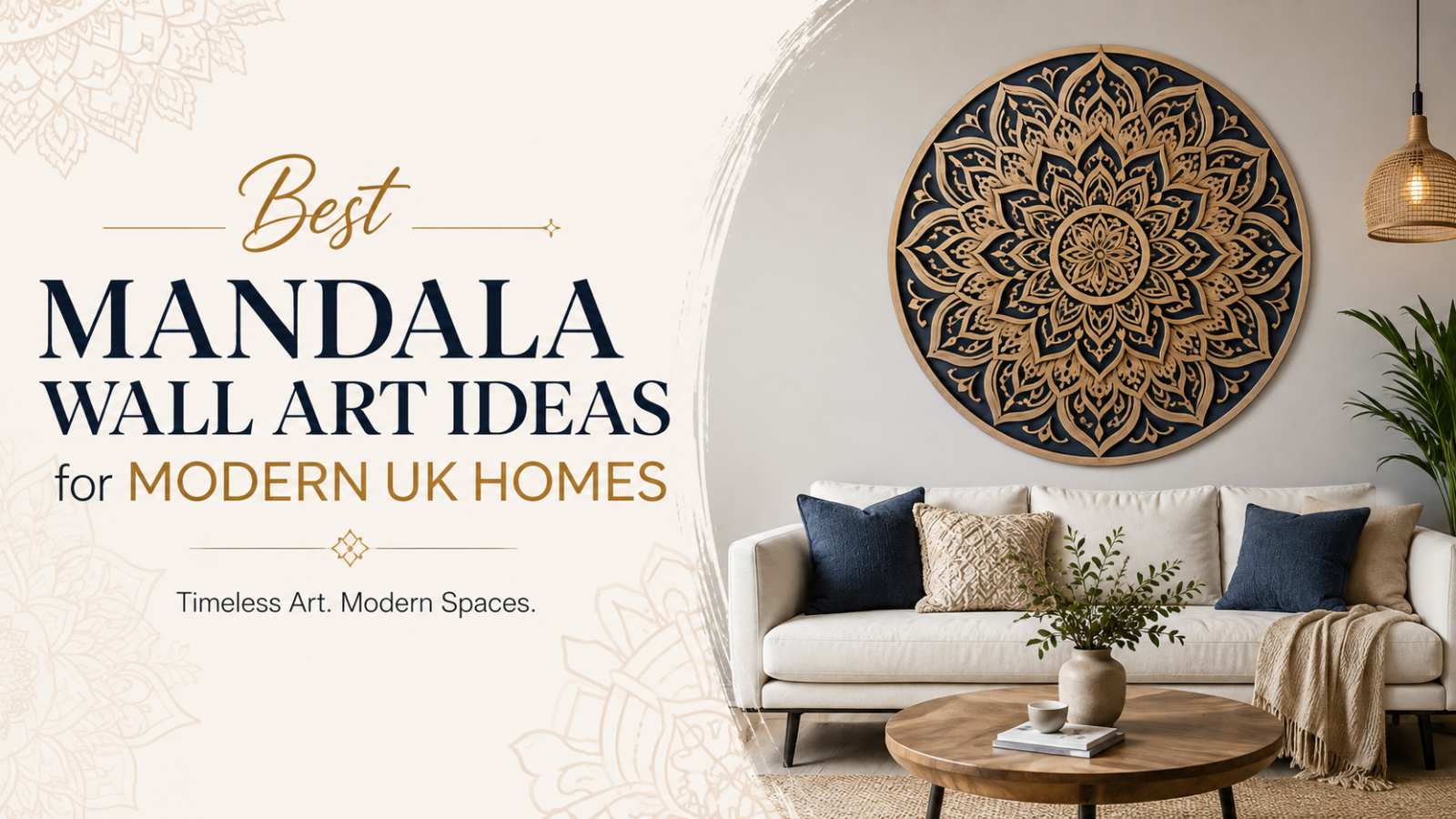
Mandala wall art is becoming a popular choice for homeowners who want to bring art, balance, and personality into their interiors. With its intricate patterns, symbolic details, and calming visual appeal, mandala artwork can complement everything from minimalist flats to contemporary family homes.
For UK homeowners, the beauty of mandala art is its versatility. It can work as a statement piece in a living room, a calming feature in a bedroom, or an elegant accent in a hallway. Whether your interior style is modern, bohemian, Scandinavian, or eclectic, the right mandala can enhance the space without making it feel overwhelming.
In this guide, we explore some of the best mandala wall art ideas for modern UK homes, along with practical tips for choosing the right size, placement, colours, and style.
What Is Mandala Wall Art?
A mandala is a geometric design traditionally associated with balance, unity, and harmony. The word “mandala” originates from Sanskrit and broadly refers to a circle.
Today, mandala designs are used in many forms of decorative art. Mandala wall art combines these intricate patterns with contemporary materials, colours, and artistic techniques, making it suitable for modern interiors.
The symmetrical appearance of mandalas can create a natural focal point while adding visual interest to otherwise simple walls.
Why Choose Mandala Wall Art for a Modern UK Home?
Modern interiors often focus on clean lines, neutral colours, and uncluttered spaces. While this creates an elegant look, it can sometimes feel too plain.
A carefully selected mandala can introduce pattern and character while maintaining a sophisticated appearance.
Here are some reasons to consider mandala artwork for your home:
- Adds an artistic focal point
- Complements minimalist interiors
- Introduces pattern without excessive decoration
- Works with neutral and bold colour palettes
- Can create a calming atmosphere
- Suitable for different rooms and interior styles
- Makes a distinctive decorative or housewarming gift
The key is choosing artwork that complements your existing décor rather than competing with it.
1. Create a Statement Wall in the Living Room
The living room is one of the best places to display mandala wall art.
If you have a large empty wall behind your sofa, consider using one large mandala as the main focal point. A detailed design can immediately draw attention and give the room a more finished appearance.
For modern UK interiors, consider pairing a statement mandala with:
- Neutral sofas
- Natural wood furniture
- Soft lighting
- Minimal decorative accessories
- Beige, cream, grey, or earthy tones
A large circular design can also soften the straight lines commonly found in contemporary furniture.
2. Choose Neutral Mandala Art for Minimalist Interiors
Minimalist homes do not necessarily need completely plain walls. Instead, choose artwork that adds detail while maintaining a restrained aesthetic.
Black, white, beige, grey, and natural wood tones can work particularly well in minimalist spaces.
A monochromatic mandala can provide texture and visual interest without introducing too many competing colours.
This approach is particularly useful if your home already has a neutral palette.
3. Add Mandala Art to the Bedroom
The bedroom should feel comfortable, peaceful, and personal.
A carefully selected mandala can help create a visually calming environment. Consider placing a medium or large design above the bed or on a feature wall.
Soft colours such as:
- Sage green
- Cream
- Terracotta
- Beige
- Soft blue
- Warm brown
can complement a relaxing bedroom palette.
Avoid choosing an artwork that feels visually too busy if your main goal is to create a restful atmosphere.
4. Use Mandala Wall Art in a Meditation Corner
If you have a small meditation, yoga, or mindfulness area at home, mandala artwork can make a natural decorative addition.
Place the artwork where it can become a visual point of focus during quiet moments.
You can complement it with:
- A comfortable meditation cushion
- Indoor plants
- Soft lighting
- Natural textures
- Candles or decorative objects
The goal is not to overcrowd the area. A simple arrangement can create a more intentional and peaceful corner.
5. Try Large Mandala Wall Art for Open Spaces
Large open-plan homes can sometimes have walls that feel empty despite having plenty of furniture.
Instead of filling the wall with multiple small decorations, consider one large mandala wall art piece.
Large artwork can help define a particular area within an open-plan room while creating a strong visual anchor.
For example, a large mandala can work above a dining table, behind a sofa, or on a prominent entrance wall.
Expert Tip
Before purchasing large artwork, measure both the wall and the furniture below it. The artwork should generally feel proportionate to its surroundings rather than appearing too small or oversized.
6. Combine Mandala Art With Natural Materials
Modern UK interiors often incorporate natural materials such as wood, rattan, linen, stone, and plants.
Mandala designs can work beautifully alongside these textures.
For example, a wooden mandala displayed against a neutral wall can create warmth without making the room feel heavily decorated.
You can also combine mandala artwork with:
- Woven baskets
- Wooden furniture
- Indoor greenery
- Linen curtains
- Natural rugs
This combination works especially well for contemporary, rustic, and bohemian-inspired interiors.
7. Use Mandala Art in Hallways and Entryways
The hallway is often overlooked when decorating a home.
However, it is the first area guests see when they enter your property. A well-positioned piece of mandala art can make a simple entrance feel more welcoming.
For narrow hallways, choose a medium-sized design that does not make the space feel crowded.
For larger entrance areas, a statement piece can create an impressive first impression.
8. Create a Mandala Gallery Wall
If you prefer a more creative approach, consider creating a gallery wall using several complementary mandala designs.
Rather than randomly combining artwork, choose a consistent theme.
For example, you could use:
- Similar colour tones
- Different mandala patterns
- Consistent framing
- Varying artwork sizes
- One dominant design with smaller supporting pieces
A gallery wall works particularly well in living rooms, stairways, home offices, and larger hallways.
9. Choose Mandala Art That Complements Your Colour Scheme
Colour is one of the most important considerations when choosing wall art.
Instead of selecting artwork based only on the design, look at the colours already present in your room.
For example:
| Interior Colour | Suitable Mandala Tones |
| Beige & Cream | Earthy, Brown, Gold |
| Grey | Black, White, Silver |
| Green | Natural, Gold, Beige |
| White | Almost Any Palette |
| Terracotta | Cream, Brown, Warm Gold |
| Navy | White, Gold, Neutral |
The artwork does not need to exactly match your furniture. It simply needs to complement the existing palette.
10. Choose the Right Size for Your Wall
Size can dramatically affect how your mandala wall art looks.
A small artwork on a large empty wall may appear disconnected, while an oversized piece in a small room can dominate the space.
Before buying, measure the available wall area and consider the furniture around it.
For example:
- Small artwork: Ideal for shelves, narrow walls, and small rooms
- Medium artwork: Suitable above consoles and beds
- Large artwork: Best for statement walls and open spaces
- Multiple pieces: Great for gallery walls and larger areas
Proportion is more important than simply choosing the largest available artwork.
How to Style Mandala Wall Art Without Overcrowding Your Home
Because mandala designs can contain intricate patterns, balance is important.
If your artwork is detailed, keep surrounding décor relatively simple. Avoid placing too many competing patterns directly next to it.
A useful styling principle is:
Detailed artwork + simple surroundings = balanced interior.
For example, if you choose an intricate mandala for your living room, pair it with neutral furniture and a limited number of decorative accessories.
This allows the artwork to remain the centre of attention.
Where Should You Place Mandala Wall Art?
The ideal location depends on the size and purpose of the artwork.
Popular placement options include:
- Above the sofa
- Above the bed
- Above a dining table
- In the entrance hallway
- On a living room feature wall
- In a home office
- Inside a meditation space
- Along a staircase
Hang the artwork at a comfortable viewing height and make sure it relates visually to the furniture below it.
How to Choose Mandala Wall Art for Your Interior Style
Different mandala designs can suit different interior aesthetics.
Modern
Choose clean patterns, restrained colours, and simple presentation.
Bohemian
Look for detailed patterns, earthy colours, natural textures, and layered décor.
Scandinavian
Choose minimal mandala designs with neutral colours and simple surroundings.
Contemporary
Consider bold designs that contrast with clean furniture and modern architectural details.
Eclectic
Mix different patterns and artistic styles while keeping a consistent colour connection.
Why Mandala Wall Art Makes a Meaningful Home Décor Choice
Beyond its decorative appeal, mandala art has a long association with concepts such as balance, wholeness, and harmony.
For many people, these symbolic qualities make mandala artwork more meaningful than ordinary decorative prints.
However, the meaning of a mandala can vary depending on its cultural, spiritual, and artistic context. It is best to appreciate mandala art respectfully and understand that contemporary decorative interpretations may differ from traditional uses.
Final Thoughts
The best mandala wall art ideas for modern UK homes are those that balance artistic expression with the existing style of the room.
Whether you choose a large statement design for your living room, a calming piece for your bedroom, or a smaller artwork for your hallway, consider the artwork’s size, colour, placement, materials, and relationship with the surrounding décor.
Mandala wall art can add personality to minimalist interiors, warmth to contemporary spaces, and visual interest to neutral rooms. With thoughtful styling, it can become more than a decoration, it can become a distinctive focal point within your home.
If you’re looking for unique artwork for your space, explore Nivaas Art’s collection of mandala wall art to find designs that complement your interior and personal style.
Frequently Asked Questions
1. Is mandala wall art suitable for modern homes?
Yes. Mandala wall art can work particularly well in modern homes because its geometric patterns complement clean architectural lines while adding texture and visual interest.
2. Where should I hang mandala wall art?
Popular locations include living rooms, bedrooms, hallways, dining areas, home offices, and meditation spaces. The ideal placement depends on the artwork’s size and the room’s layout.
3. What colour mandala art is best for a neutral room?
Neutral rooms can accommodate many colour combinations. Black, white, beige, earthy tones, gold, and muted colours can all complement neutral interiors.
4. Can mandala wall art work in a small room?
Absolutely. Choose a proportionate design and avoid overcrowding the surrounding area. A carefully positioned medium or small mandala can add personality without making the room feel smaller.
5. Is mandala wall art a good housewarming gift?
Yes. Mandala artwork can be a thoughtful housewarming gift because it combines decorative appeal with symbolism associated with balance and harmony.